Chemical Peels For Acne Scars & Pigmentation: What You Need To Know

Acne scars and pigmentation can be frustrating, stubborn, and difficult to treat with skincare products alone.
Chemical peels offer one of the most effective professional solutions available.
How Chemical Peels Improve Pigmentation
Pigmentation occurs when excess melanin becomes trapped within the skin.
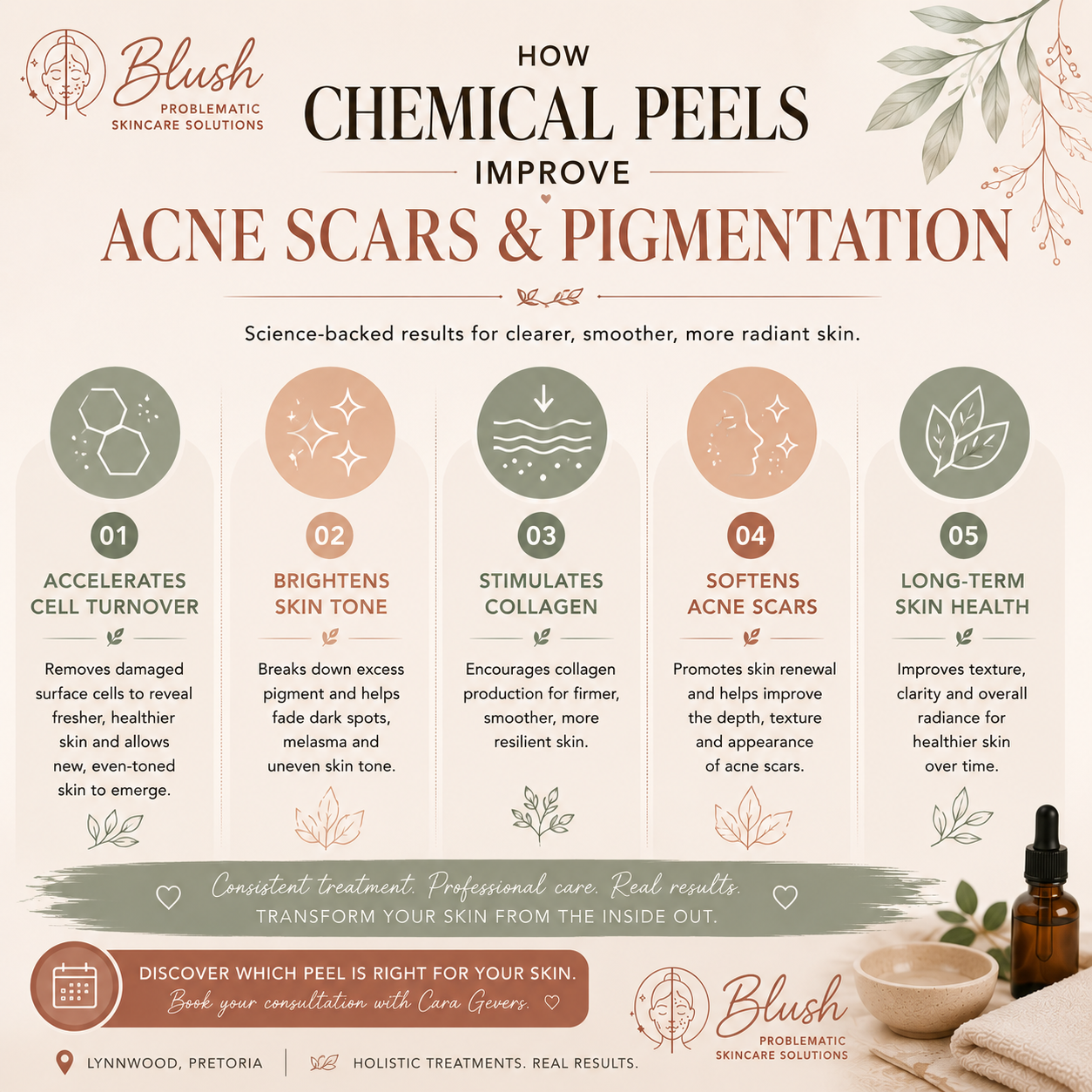
Chemical peels accelerate cell turnover, helping the body shed pigmented cells and reveal brighter, more even-toned skin beneath.
For mild pigmentation, Glycolic Peels can be highly effective.
For deeper pigmentation and melasma, TCA Peels may be recommended.
How Chemical Peels Improve Acne Scars
Acne scars form when inflammation damages collagen structures beneath the skin.
TCA Peels work deeper within the skin and stimulate a controlled healing response that encourages new collagen formation. This helps soften acne scars and improve texture over time.
What Results Can You Expect?
Most patients notice:
Brighter skin
Smoother texture
Reduced pigmentation
Improved clarity
Firmer skin
Results continue to improve as collagen production increases.
The Importance Of Professional Assessment
Not every peel is suitable for every person.
Factors including:
Skin type
Sensitivity
Current skincare routine
Existing skin conditions
must be considered before treatment.
At Blush, every peel recommendation is tailored to your unique skin profile.
Begin Your Skin Transformation
Whether you’re struggling with acne scars, pigmentation, sun damage, or dullness, chemical peels can be a powerful part of your skincare journey.
Book a consultation with Cara Gevers and discover which treatment is best suited to your skin goals.